
Our Location
304 North Cardinal St.
Dorchester Center, MA 02124

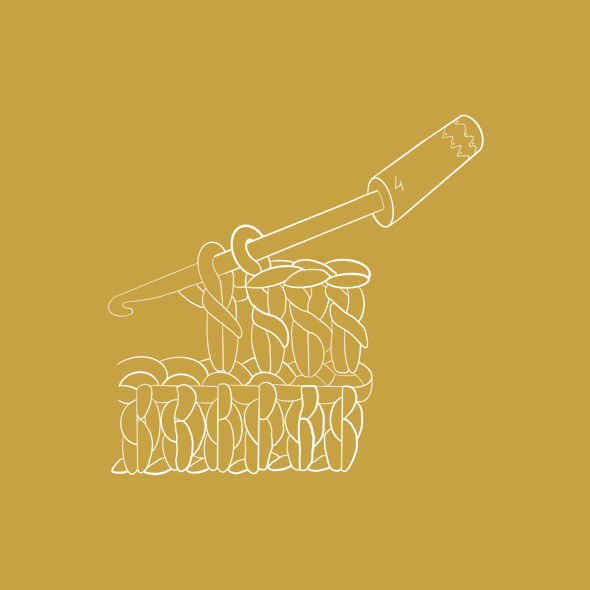
Filet is the French word for “net.” This type of crochet work resembles simple, straight-to-straight lacemaking. It is worked using two basic stitches that are already familiar: the chain stitch and the double crochet (UK: treble). The double crochet stitches are worked in groups to form a solid block. These blocks are connected by the same number of chain stitches as the stitches in the blocks. The basic form of filet crochet is a grid of squares. This is usually composed of single double crochet stitches connected by two chain stitches. In the design, certain squares are filled with double crochet stitches (for the solid block), and in this way, various patterns can be created. Most yarns are suitable for filet crochet, but crochet cotton or fine yarn is most suitable, as it gives the work a light and airy appearance.
On the French Connection: A Critical Note on African Hook-Based Textile Making
While the term “filet” is French, the technique of creating patterned textiles using a hooked tool and a grid-based structure is not European in origin. The framing of filet crochet as “French” reflects a broader pattern in textile history where African technical innovations have been overlooked or erased.
Archaeological and anthropological research contradicts the notion that hook-based textile techniques originated in or were exclusively developed by European traditions. Evidence of sophisticated textile production and pattern-making in Africa predates European contact by millennia.
Key facts to consider:
Filet crochet, as a technique, is universal. The grid, the hook, the loop—these are not French inventions. What is often called “filet crochet” in European pattern books represents one documented variation of a much older, globally distributed family of textile techniques. By selling filet crochet patterns, you are not participating in a “French tradition.” You are engaging with a mathematical and textile logic that has been independently discovered and refined by countless cultures—including the rich, under-documented textile traditions of Africa.
“While the term ‘filet’ is French, the technique of creating patterned textiles using a hooked tool and a grid—a mathematical and textile logic—has been discovered independently across many cultures. We honor the African textile innovators whose contributions to hook-based making remain under-recognized in mainstream craft history.”
